
Companion product
Wise Event Planner
For institutions that host conferences and hire out their venues, where an enquiry has to travel through several people before it becomes a confirmed booking with an invoice attached.
An event is a process, not a reservation
A room booking is a single act. Hosting an external conference is not: somebody enquires, documents are submitted, a committee reviews them, finance prices it, and only then does it become a confirmed event. Handled in email, that process loses things.
Wise Event Planner models it explicitly. An event moves through eleven defined stages — New, Requested, Initialized, Documents Submitted, Documents in Review, Accepted, Accepted in Review, Confirmed, Pending, Rejected, Cancelled — each with its own colour, so a list of fifty events is readable at a glance and nobody has to ask where something stands.
Six roles, each seeing what it needs
The three parts — host administration and approval, the client interface and the participant interface — share one database, so status is accurate everywhere and previous events stay as history rather than being archived off into a spreadsheet.
- Administrator — staff, clients, participants, venues, documents, configuration and the logs
- Event planners — the day-to-day handling of venue bookings and open events
- Scientific committee — reviews submitted documentation and accepts or rejects on academic grounds
- Finance — the money side: rental rates, discounts and what each event is worth
- Clients — the external organisers, who book venues and manage their own events without being given the run of the system
- Participants — who register for an event and see their own calendar
Venues as sellable inventory
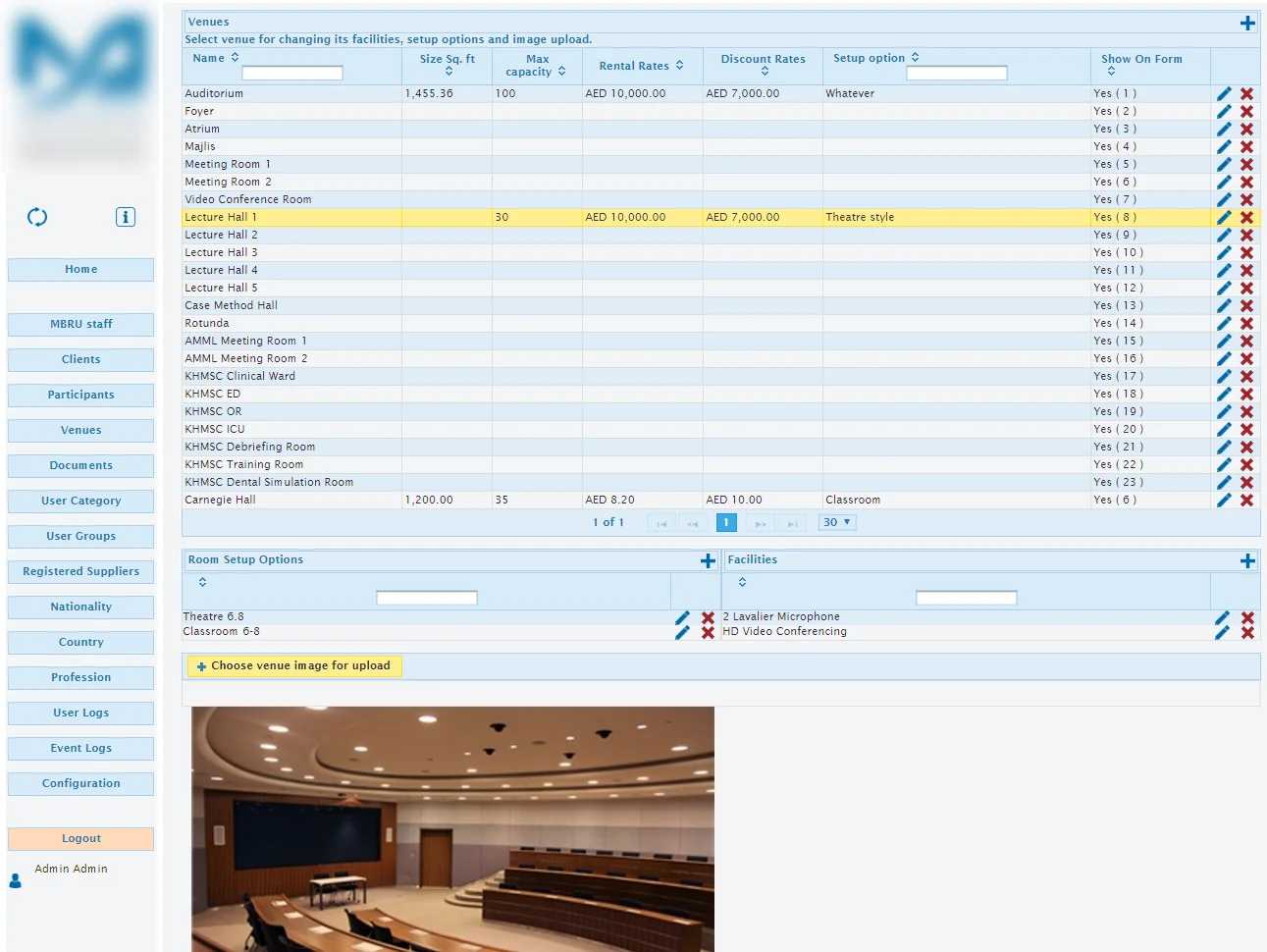
Venues carry the attributes a hirer actually asks about: floor area, maximum capacity, rental rate, discount rate, setup options — theatre style, classroom and so on — the facilities included, such as microphones and video conferencing, and a photograph. External clients browse them before enquiring, which removes a round of email before it starts.
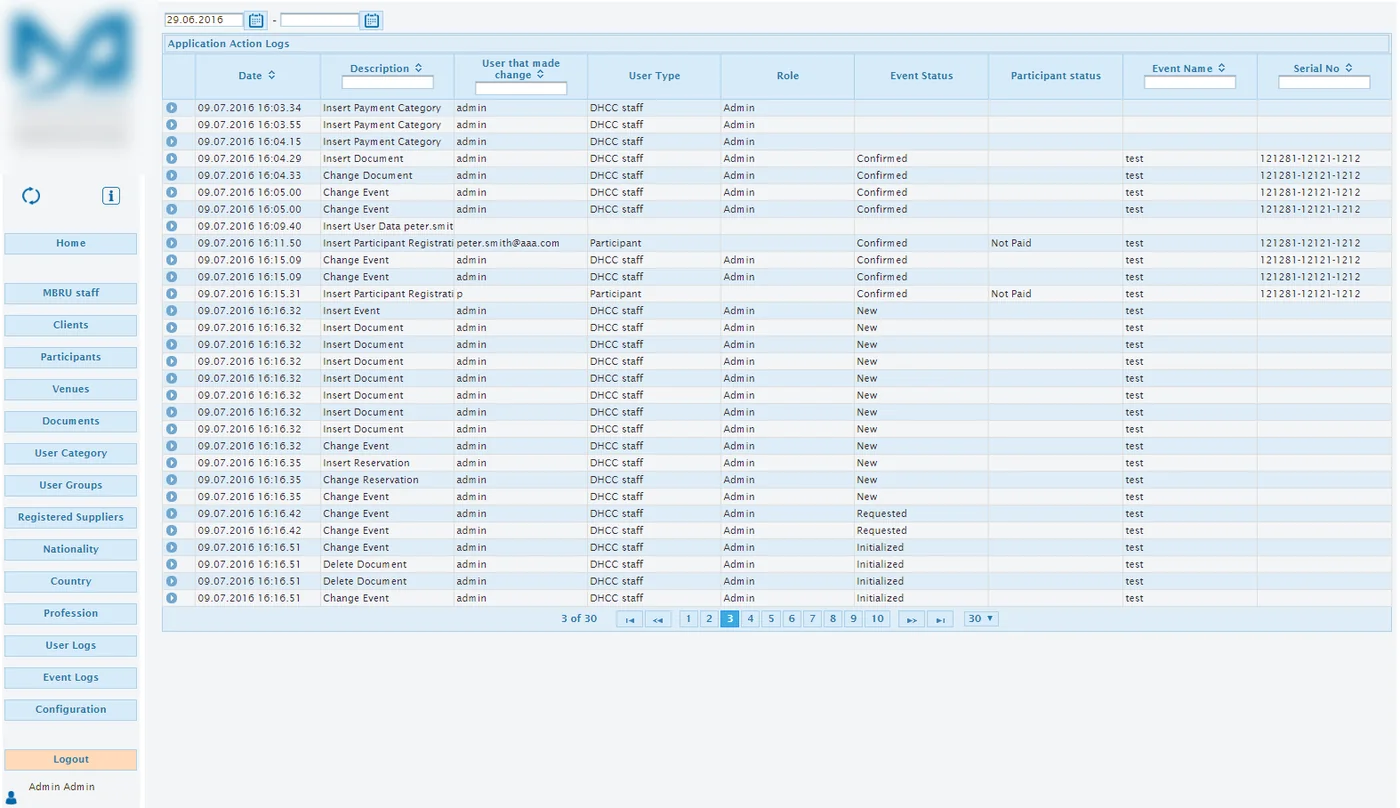
Registered suppliers, user categories, user groups, nationality, country and profession are all maintained centrally, and every change is recorded in a user log and an event log.
See Wise Event Planner for yourself
Tell us how your organisation schedules today and we will show you Wise Event Planner running against that, rather than a demonstration dataset chosen to make the software look good.