
Building the timetable
Automatic timetable generation
Institutions routinely underestimate this problem. Teams of experienced staff often need several months to produce a working version by hand. Wise Timetable produces one in minutes — and then lets you argue with it.
- Under a minute to regenerate
- Lock what must not move
- Compare multiple variants
One click, once the inputs are right
Data collected, constraints defined: generation is a single action inside the administration console.
The engine solves scheduling scenarios that defeat manual approaches, and it does so fast enough that regeneration is a routine step rather than an overnight batch job. Even large and complex university timetables regenerate in under a minute, which changes how you work: you experiment, rather than committing to a single run.
Institutions often tell us that their case is unusually specific. It usually is — and the system has repeatedly handled those requirements while outperforming the human teams that previously did the work, provided the constraints were imported properly. That proviso matters, and we would rather say it plainly than promise magic.

Automatic and manual, mixed freely
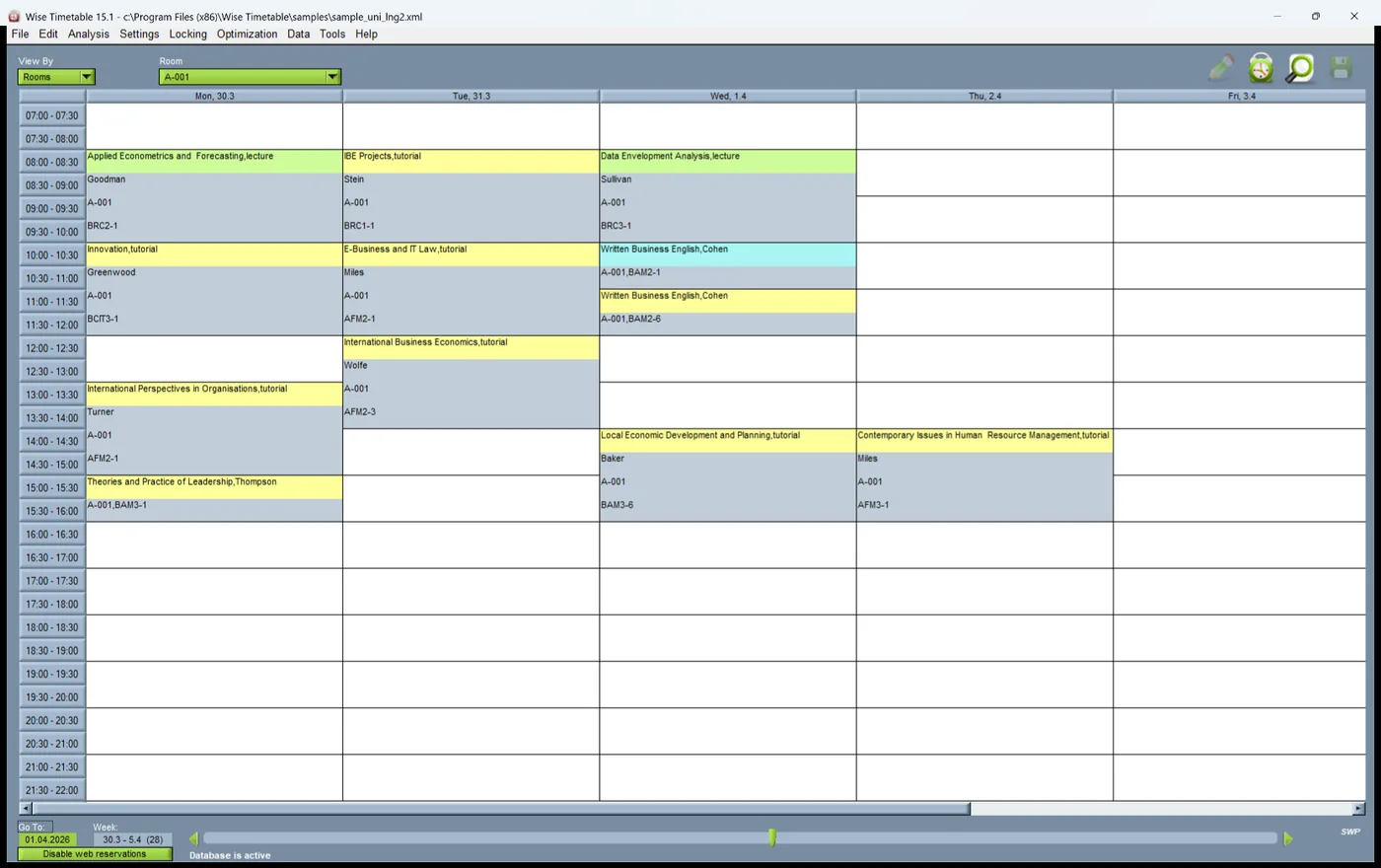
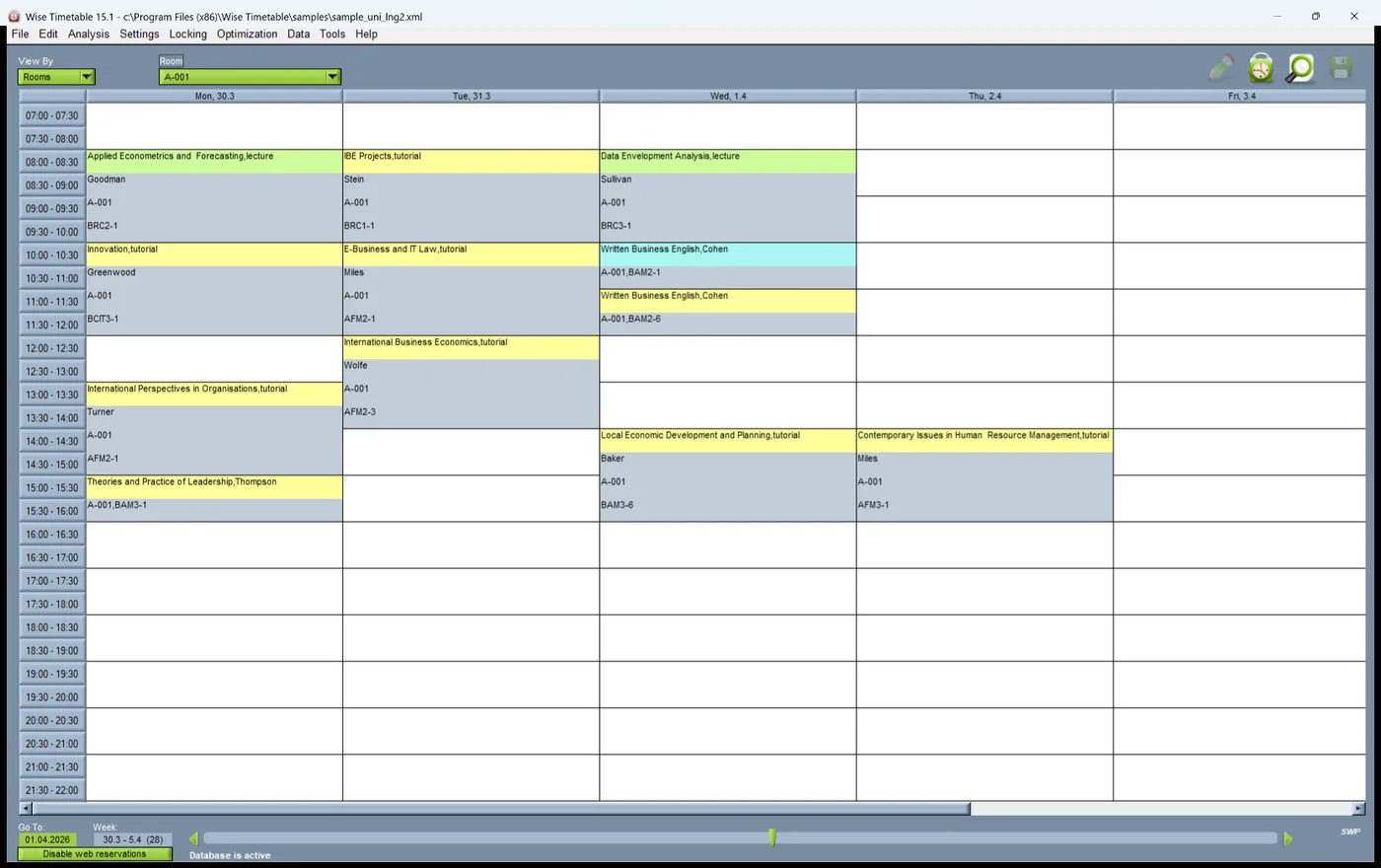
Flexibility is preserved throughout. Place the sessions that must not move — a professor's fixed commitment, a shared lecture with another faculty, a laboratory slot tied to technician availability — and lock them. Lock them individually, or lock the entire timetable built so far in one action.
Locked sessions are marked with a key icon so they are obvious at a glance, and generation builds the remainder around them without touching them. This hybrid approach is how most of our institutions actually work, and it is why the system does not feel like handing control to a black box.
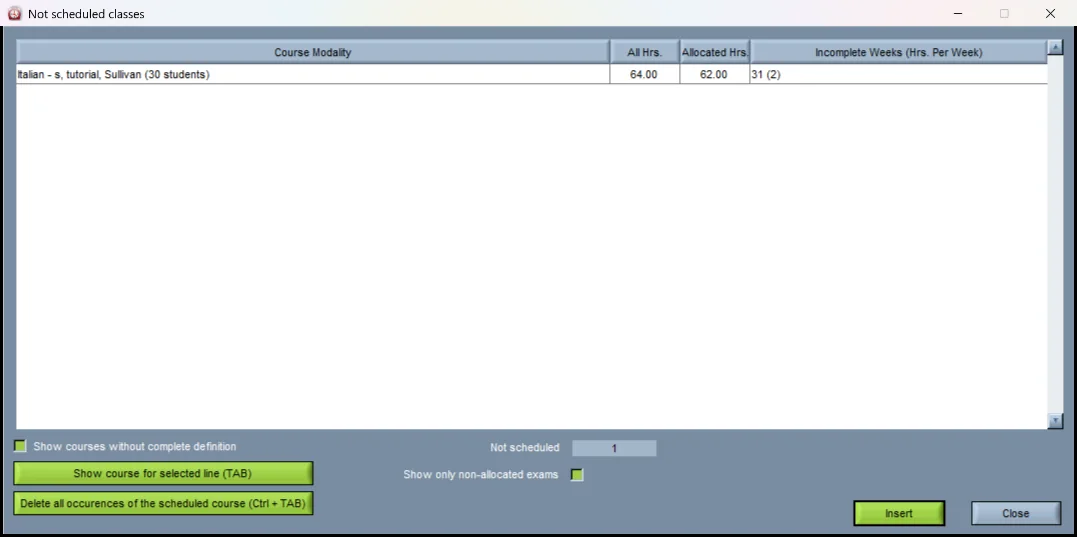
Where sessions cannot be scheduled at all, they are presented in a clear list ready for manual placement, with the option to override a constraint if you judge that acceptable.
Generating settings you can tune
- University working hours, primary and extended
- Maximum permitted teaching hours per day or per week
- Defined lunch breaks and mandatory pauses
- Break distribution optimised for lecturers or for students
- Teaching load condensed into fewer days, or spread evenly across the week
- Weekly schedules or full-year plans
- Multiple variants generated and compared before you commit to one
Generate according to lecturer availability
The most useful thing you can point generation at is availability your lecturers submitted themselves. Open the web booking system to your teaching staff, let them book the hours they are free, then run generation against exactly that.
No phone calls, no spreadsheet reconciliation, and no argument afterwards about who is available when. See how that works.
See Wise Timetable on your own data
Book a 45-minute online presentation. We will walk through your institution's scheduling problem, show how Wise Timetable handles it, and answer anything your team wants to test.