
Data collection
Let lecturers book their own free time
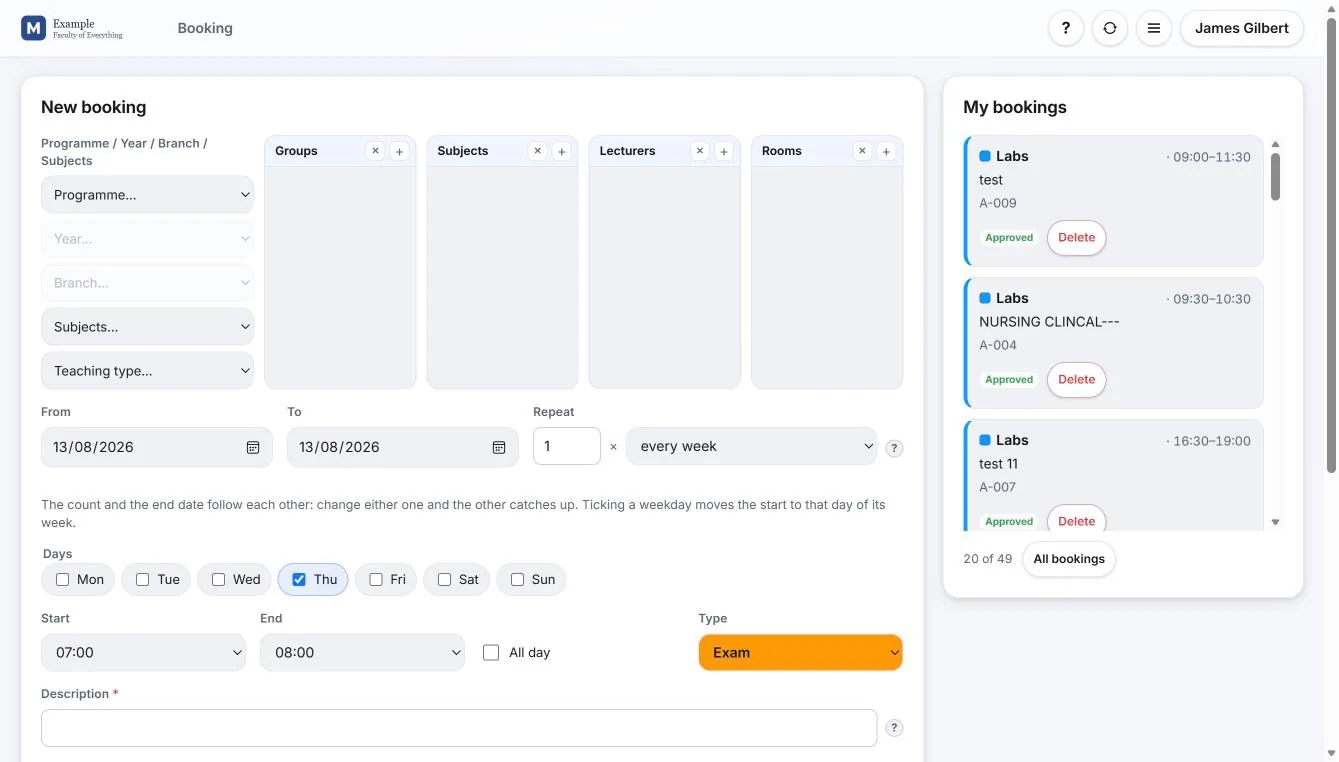
This is the part of Wise Timetable that has no equivalent anywhere else. Rather than an administrator chasing availability by email and phone for a fortnight, you open the web booking system to your teaching staff and they book the hours they are free themselves.
- No installation for lecturers
- Live completion tracking
- Generation runs straight off it
How the cycle runs
Four steps, and the administrator is only involved in two of them.
Open the booking system
You enable web access for your teaching staff. Accounts can be generated automatically, or your existing single sign-on handles it — Shibboleth and comparable systems are supported, so most institutions issue no credentials at all.
Lecturers book their free hours
Each lecturer signs in through a browser, at their own pace, and books the times they are available to teach. Nothing to install, nothing to learn, no form to email back.
Chase the stragglers automatically
The administrator sees a live completion view showing who has responded and who has not, and sends reminders in one action rather than making a hundred phone calls.
Generate against it
In the administration console, generation runs directly against the submitted availability. The data your lecturers entered is the constraint set — there is no transcription step in between.
Why this changes the arithmetic of a timetabling cycle
Ask any timetabling office where the calendar time actually goes and the answer is never the algorithm. It is the collection phase: hundreds of emails and calls, corrections arriving after the spreadsheet has been closed, and a fortnight of coordination that produces data which is already out of date when it is keyed in.
Removing that phase saves more elapsed time than any improvement to generation speed could. It also removes the most common source of scheduling error, because nothing is retyped from one system into another.
And it changes the politics. When a lecturer questions why they are teaching at eight on a Friday morning, the answer is that they booked that hour themselves. Disputes about availability largely disappear, because the record is theirs.
Checking availability, throughout the year
The same visibility applies after the timetable is published. Before moving a session, an administrator can see immediately when the lecturer, the room and the student group are all genuinely free — rather than making a change and discovering the clash later.
Lecturers also verify their own timetable before it is released. Wise Timetable supports an unlimited number of internal published timetables, and most institutions keep one specifically for verification and review.
- Live view of lecturer, room and group availability before any change
- Unlimited internal timetables, including one for verification
- Lecturers confirm their own schedule before publication
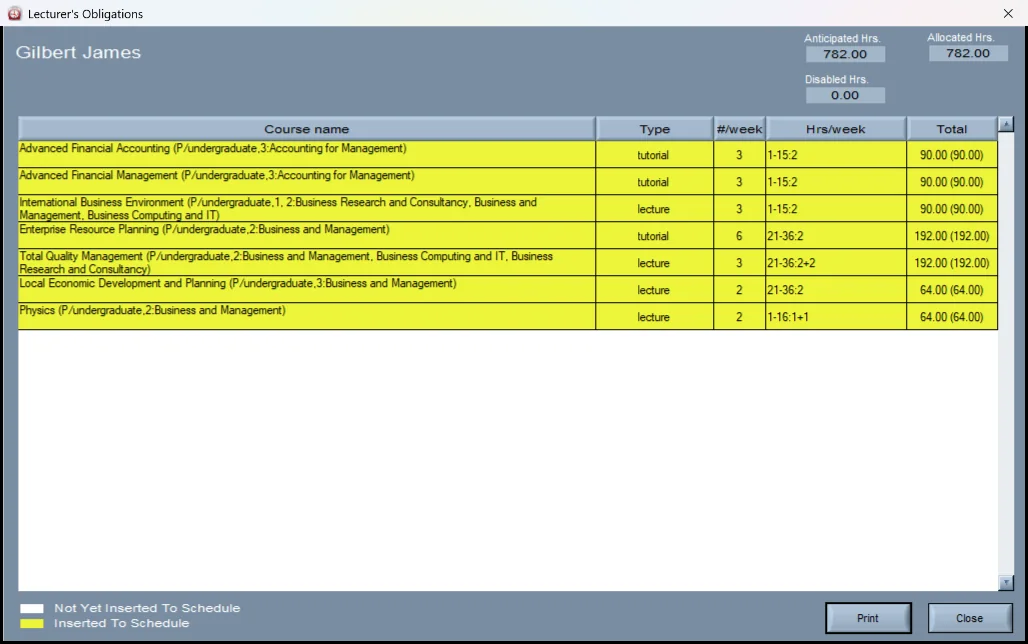
- Workload distribution reports for management, by lecturer and department
- The same booking system also handles rooms, labs and consultations — one product, not two
See Wise Timetable on your own data
Book a 45-minute online presentation. We will walk through your institution's scheduling problem, show how Wise Timetable handles it, and answer anything your team wants to test.