
Building the timetable
Constraints that match reality
A timetable is only as good as the rules it was built from — the teaching requirements, staff availability and unavailability requests you collect every year. Wise Timetable handles thousands of constraints and distinguishes between the ones that must never be broken and the ones you would merely prefer.
Hard constraints vs soft preferences
Most scheduling failures come from treating every rule as absolute. A room that cannot hold ninety students is a hard constraint. A lecturer who would rather not teach on Fridays is a preference.
Wise Timetable keeps these separate. Hard constraints are always enforced — the system will report a session as unallocated rather than violate one. Soft preferences are optimised: satisfied wherever possible, traded off against each other where they conflict.
This distinction is what allows a solution to exist at all. If every preference were treated as inviolable, almost no real university timetable would be solvable, and you would be left manually overriding rules until it was.
What you can define
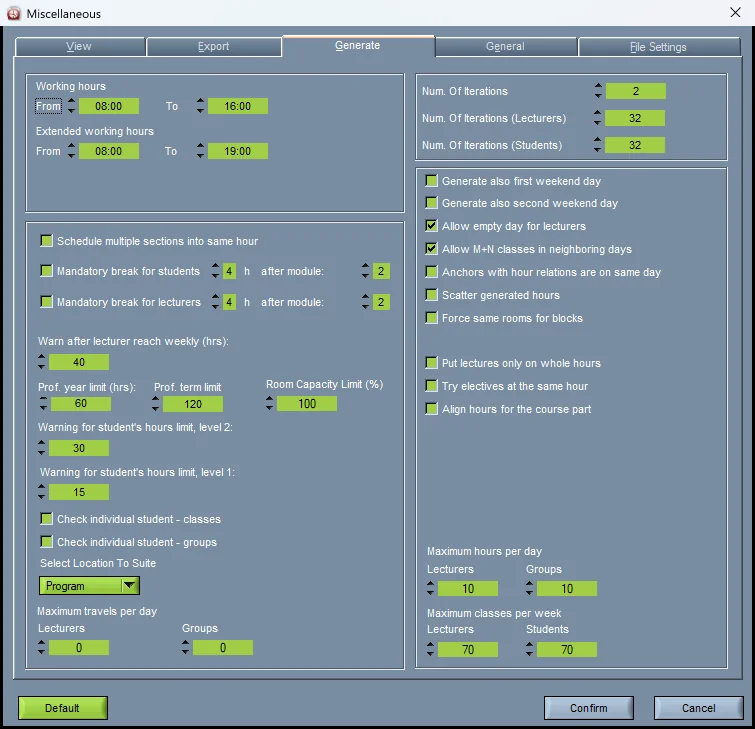
- University working hours, both primary and extended
- Maximum permitted teaching hours per day and per week
- Defined lunch breaks and mandatory pauses
- Break distribution optimised for lecturers or for students
- Teaching load distribution — condensed into fewer days, or spread evenly
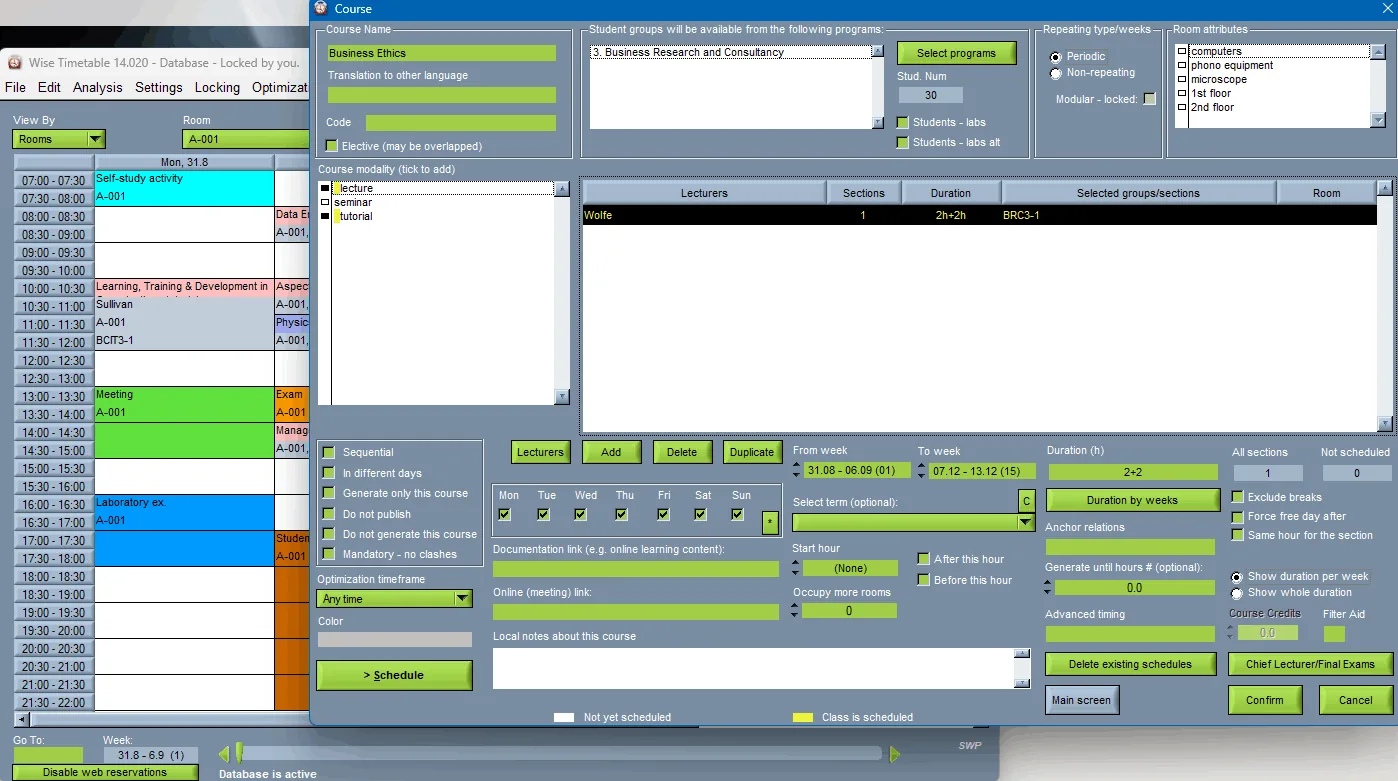
- Room locks, so specific sessions can only occur in specific rooms
- Equipment and facility requirements per session type
- Travel time between buildings and campuses
- Lecturer availability, submitted by lecturers themselves
- Fixed sessions locked in place so generation must work around them
When constraints make a timetable impossible
Occasionally a constraint set admits no complete solution even in theory. Wise Timetable does not fail silently or quietly break a rule to produce something that looks finished. It schedules everything it can and presents the unallocated sessions in a clear list.
From there you either place those sessions manually into the free slots the system shows you — overriding a constraint where you judge that acceptable — or relax a constraint and regenerate. Because even large timetables regenerate in under a minute, iterating towards a workable compromise is cheap.
See Wise Timetable on your own data
Book a 45-minute online presentation. We will walk through your institution's scheduling problem, show how Wise Timetable handles it, and answer anything your team wants to test.