Tuition and revision centres
One-to-one and small-group tuition, where every student's schedule is genuinely their own and the timetable changes weekly.

Companion product
Almost every timetabling system on the market assumes a cohort — thirty students who move through the week together. Tuition schools do not work that way, and it is remarkable how little software is built for the way they actually operate.
The cohort assumption runs so deep in academic scheduling software that it is rarely stated. Break it and most systems stop being useful.
In a university, a timetable places groups. Group BAM1-3 attends the lecture; individuals inside it are interchangeable as far as the schedule is concerned. That assumption is what makes automatic generation tractable, and it is baked into how the data is modelled.
A tuition centre is the opposite. Ana has a piano lesson at four on Tuesday with a particular teacher; Marko has one at five with a different teacher, in a different room, every other week. The unit of scheduling is the individual, the relationship between that individual and a tutor matters, and the pattern changes constantly.
Forced into cohort-based software, the usual result is a group per student — hundreds of groups of one — and reporting that cannot answer the question the business actually asks: how many hours did this student have, with whom, and in which room.
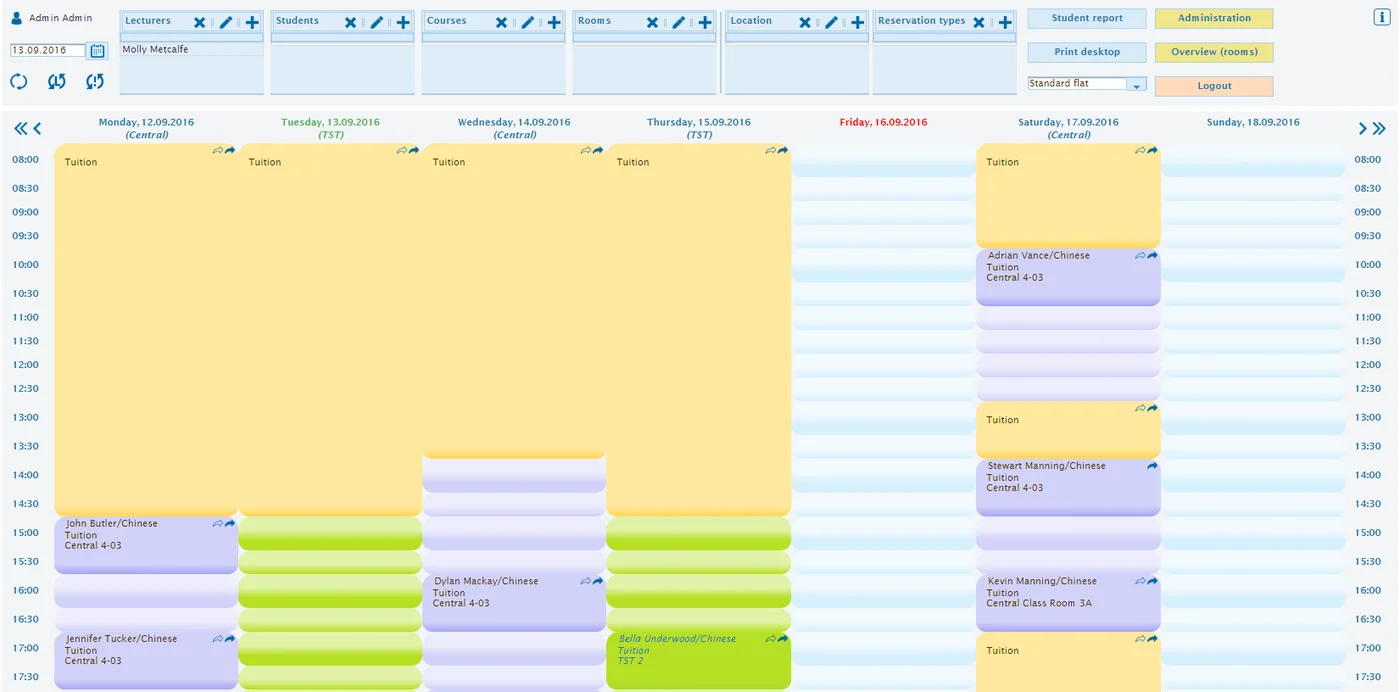
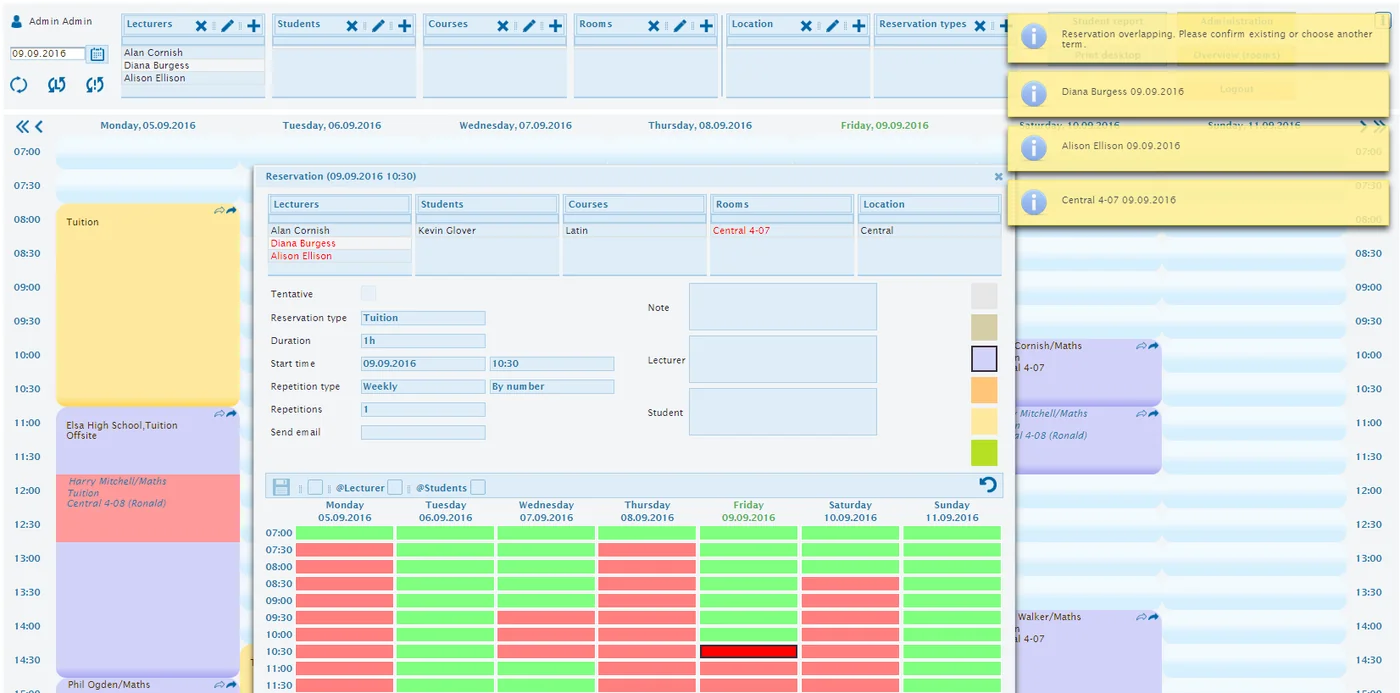
It is web based throughout, so tutors and administrators reach it from a browser with no installation.
One-to-one and small-group tuition, where every student's schedule is genuinely their own and the timetable changes weekly.
Mixed provision: group courses running alongside private lessons, often across several locations and time zones of availability.
Individual instrument lessons with named teachers and specific rooms, plus ensemble sessions that are cohort-shaped after all.
Instructor and vehicle both scheduled against an individual learner, with progress tracked per student.
Professional and vocational training where attendance per delegate has to be evidenced rather than assumed.
The product was written for organisations that administer a large number of time events and need to share the result with their users. It is not restricted to education.
It is a separate product with its own licence, but it is built by the same team on the same assumptions: a web application rather than an installation, results published to the people who need them, and an administration layer that ordinary staff can operate without involving IT.
If your institution needs both — a university timetable and a separate tuition operation — tell us and we will quote them together.
Tell us how your organisation schedules today and we will show you Wise Time Planner running against that, rather than a demonstration dataset chosen to make the software look good.